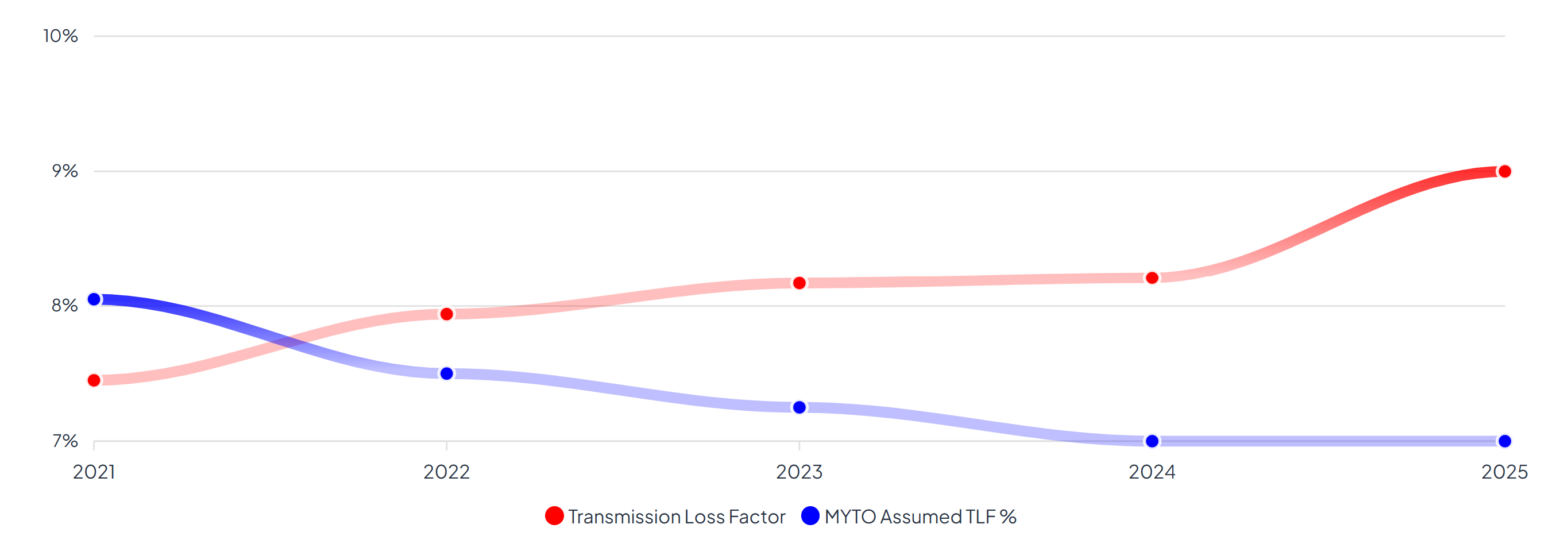
The transmission loss factor (TLF) measures the share of energy that is lost on the transmission network between power stations and the distribution companies. It is one of the simpler indicators of how efficiently the high-voltage network is working.
Why planners care
Energy lost in transmission is generated but never delivered. A higher loss factor means more generation is needed to deliver the same quantity to distribution companies, and it affects how costs are shared across the market. Planners use the trend to judge whether network performance is improving or deteriorating.
How to read it
Look at the direction over several periods rather than a single reading. Check the reporting period and the unit, and compare with the volume of energy handled, since a stable factor on a rising volume still means more energy lost in absolute terms.
Limits
The factor is an aggregate and does not say where on the network losses occur. A change may reflect network conditions, metering or reporting changes, and the figure alone does not identify the cause.
Where to look
The Transmission dashboard shows the loss factor with related transmission indicators.
This guide explains how to read the indicator and does not quote figures. Open the linked dashboard for the current values and check the reporting period shown on each chart before drawing conclusions.